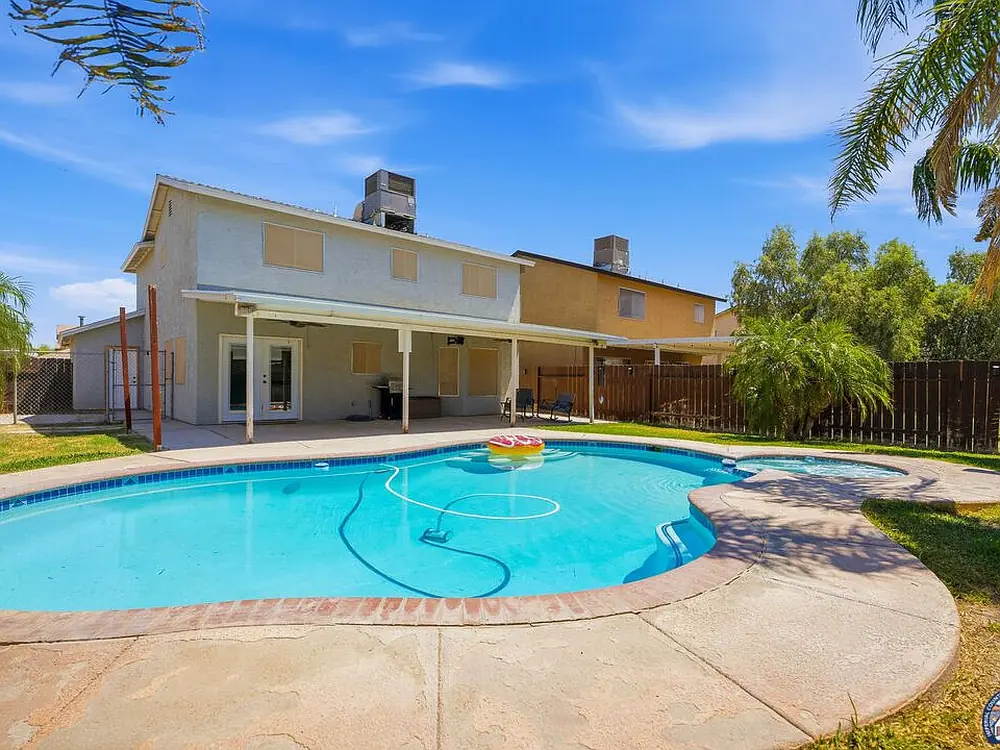
Moving to El Centro, CA means living in the county seat of Imperial County, about ten miles north of the Mexicali border crossing. Everyday costs are lower than in coastal California, the pace is slower and daily life is bilingual. Summer highs routinely climb above 110 degrees from June through September.
Where El Centro Is, and What It Feels Like
El Centro is the county seat of Imperial County, in the Imperial Valley of Southern California, about ten miles north of the Mexicali border crossing and along the Interstate 8 corridor. Roughly 44,000 people call it home. Agriculture shapes the landscape — fields stretch in every direction — and the city itself is a working regional hub with hospitals, schools, government offices, shops, and restaurants.
The first thing most newcomers notice is the pace. Life here moves slower than in Los Angeles, and people tend to know their neighbors. English and Spanish are both part of everyday life, and the culture is genuinely bicultural: a morning in El Centro and an evening in Mexicali are both completely normal parts of a week here.
Why People Move Here
The number one reason is affordability. Homes in El Centro typically cost hundreds of thousands of dollars less than comparable homes in Orange County or Los Angeles. That gap is what lets many buyers go from renting a small apartment on the coast to owning a house with a yard here — sometimes for a lower monthly payment than their old rent.
The second reason is space and family. Larger lots, room for RVs and toys, and neighborhoods where kids can ride bikes are part of daily life. Many buyers are families relocating for work, first-time buyers priced out of the coast, and people returning to the Valley to be near family.
The third reason is work. Agriculture is the backbone of the Imperial Valley economy, and healthcare, education, and public-sector jobs — including federal employment tied to the border region — anchor many households. El Centro Regional Medical Center is a major local employer, and Imperial Valley College in nearby Imperial serves students across the county.
What It Costs to Live Here
Beyond home prices, everyday costs tend to run lower than coastal California: gas, groceries, and services generally stretch further, and there is no coastal premium on everything from haircuts to home repairs. That said, budget honestly for desert living: air conditioning is not optional, so summer electric bills are real, and a reliable car is essential because public transit is limited. Most households here drive everywhere, and a shaded or covered parking spot is worth more than it sounds like.
New construction is also part of the story. El Centro continues to add subdivisions — for example, the Willow Bend community, a 120-lot development on the west side of the city whose final map the City Council approved in October 2026 — so buyers can choose between established central neighborhoods, newer subdivisions on the north side, and brand-new homes. If you are deciding between resale and new construction, walk both: older homes often sit on bigger lots closer to downtown, while new builds offer modern layouts, energy efficiency, and warranties.
The Desert Climate, Honestly
Let us be direct: summers are hot. Daytime highs routinely climb above 110 degrees from June through September, and the sun is intense. Residents plan around it — errands in the morning, pools and shade in the afternoon, and cars with sunshades and working AC. The payoff is the other eight months: mild, sunny winters with daytime temperatures that make outdoor life easy, plus dramatic desert sunsets and clear night skies.
If you are considering the move, visit in the summer before you commit. A weekend in July tells you more about whether desert living fits you than any number of winter visits. If you love the heat and the wide-open sky, you will know. If you do not, it is better to learn that before you buy.
Everyday Life in El Centro
Day to day, El Centro has what a family needs: grocery stores, the Imperial Valley Mall, parks, youth sports, churches, and a downtown with local restaurants. Mexican food here is outstanding — from longtime family restaurants to taco trucks — and the cross-border connection means weekends can include dinner, shopping, or a doctor or dentist visit in Mexicali, a short drive away.
Schools serve the community through local districts, and families often choose neighborhoods with an eye on school boundaries, so ask about that early if you have kids. For a beach day trip, Interstate 8 puts the coast about two hours west — close enough for a beach day, far enough that you keep the Valley’s cost of living.
A Practical Moving Checklist
- Visit first, ideally in summer, and drive the neighborhoods at different times of day — including after dark.
- Decide rent-first versus buy-now. Renting for six months is a smart way to learn which side of town fits you before committing.
- Get pre-approved before you shop, so you know your true budget in a market where well-priced homes move.
- Line up the desert essentials: a home with good AC, shade for your car, and a water routine for the heat.
- Work with a local agent who knows the Valley block by block — not just the listings, but the lots, the builders, the flood and soil quirks, and which streets hold value.
Thinking About the Move?
El Centro rewards people who want room to breathe, a real community, and a home they can actually afford — and who are ready for genuine desert summers in exchange for mild winters and a slower, friendlier pace. If that sounds like you, come see it for yourself.
Call Gisela N. Sanchez, REALTOR® at 760-909-2185 to talk through your move, tour neighborhoods, or start your home search in El Centro.
— Gisela N. Sanchez, REALTOR®, Realtor® · eXp Realty of California · CA DRE #01765802